Donald Trump saved the CEO, but he can’t save the 17,000 Americans who unwittingly bankrolled the exit strategy for a powerful Israeli-Russian oligarchy.
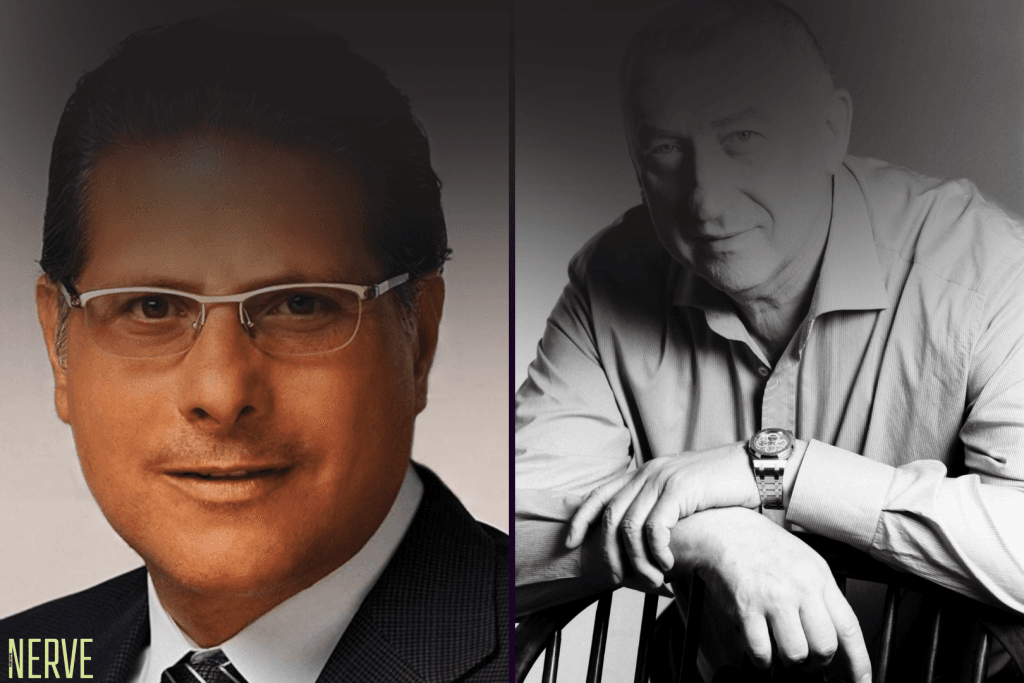
When President Donald Trump commuted the sentence of David Gentile in late November 2025, the narrative from the White House was one of correcting prosecutorial overreach. Gentile, the founder of GPB Capital Holdings, had served only days of a seven-year sentence for a $1.8 billion fraud that wiped out the savings of 17,000 Americans.
The administration’s official stance was championed by pardon czar Alice Marie Johnson and argued that the Department of Justice had “weaponized” the legal system against a businessman who had technically disclosed risks in the fine print.
But beneath the domestic debate about judicial fairness lies a far more complex and international financial reality.
Court documents, whistleblower testimony, and financial records suggest that GPB Capital was not merely a failed private equity firm. Instead, it functioned, at its inception, as a liquidity machine for the family of Michael Cherney (Mikhail Chernoy).
Cherney is an Uzbekistan-born Israeli tycoon and a central figure in one of post-Soviet Russia’s bloodiest asset wars.
While American teachers and veterans lost their retirement funds, the immediate initial beneficiaries of GPB’s earliest deals were, in effect, this powerful Israeli and his family.
Cashing Out the Cheranayas
To understand the fraud, one must look at how it began. When Gentile launched GPB Capital in 2013, he needed assets to show potential investors. He found them in a cluster of automotive dealerships owned by an entity called DJD.
The primary owners of DJD were not average car dealers. They were Rina and Diana Chernaya, the daughters of Michael Cherney.
According to court filings and investigations by state regulators, one of GPB’s first major moves was to buy these assets.
Roughly $6 million of capital collected from US retail investors expecting an 8% return was allegedly funneled to McAnna, LP.
McAnna wasn’t another car dealership, it was Michael Cherney’s holding company.
In effect, the structure allowed the Cherney family to cash out their dealership interests using fresh capital raised from unsuspecting Americans. While GPB investors were told their money was buying high-growth assets, millions were effectively serving as an exit payment for the Cherney family.4
In the shadow of the Aluminum King
The connection to Michael Cherney elevates the GPB scandal from a typical Wall Street fraud to a matter of international intrigue.
Cherney is a legendary and controversial figure in the history of post-Soviet capitalism. In the 1990s, he was a key player in the chaotic and violent struggle for control of Russia’s aluminum industry. While he has denied criminal wrongdoing, his reputation was such that he was denied a visa to the United States and has faced legal battles across Europe.
There’s little doubt that he has blood on his hands.
Since moving to Israel in the 1990s, Cherney has become a fixture in the country’s power structure. He is widely cited as a close confidant and historical backer of Avigdor Lieberman, the leader of the Yisrael Beiteinu party and a consistent kingmaker in Israeli coalition politics.
Through is ex-wife, Nicol Raidman, he’s connected to the Netanyahu family as well. Raidman is a publicized close friend of Sara Netanyahu, the wife of Prime Minister Benjamin Netanyahu.
Why was this Gentile let loose?
The commutation of David Gentile’s sentence adds a final, baffling layer to the story. While his partner, Jeffry Schneider, remains in prison serving a six-year sentence, Gentile walked free.
The discrepancy has fueled speculation regarding the “why.” Was it simply the lobbying of Alice Marie Johnson and a philosophical alignment against the DOJ? Or did the quiet pressure of international networks play a role?
While there is no public evidence linking the Cherney family directly to the Trump administration’s decision, the optics are stark. A fraudster who facilitated the transfer of American wealth into the hands of a foreign oligarch’s family has been granted clemency, while the victims of that transfer remain uncompensated.