It is time to recall the ambassador who, while posturing as a representative of the United States, has begun to openly flaunt his disagreement with American foreign policy objectives.
The role of an ambassador is to represent the voice of the President and the policy of the United States. Yet, in recent months, US Ambassador to Israel Mike Huckabee has increasingly appeared to be operating under his own diplomatic charter, one that frequently clashes with the objectives of the Trump administration and long-standing American foreign policy.
Huckabee has gone native. Huckabee is high on his own supply.
Two recent incidents highlight a troubling pattern of Huck prioritizing his personal ideological alignment with Israeli factions over the strategic interests of the nation he was sent to represent.
Contradicting the President on Qatar
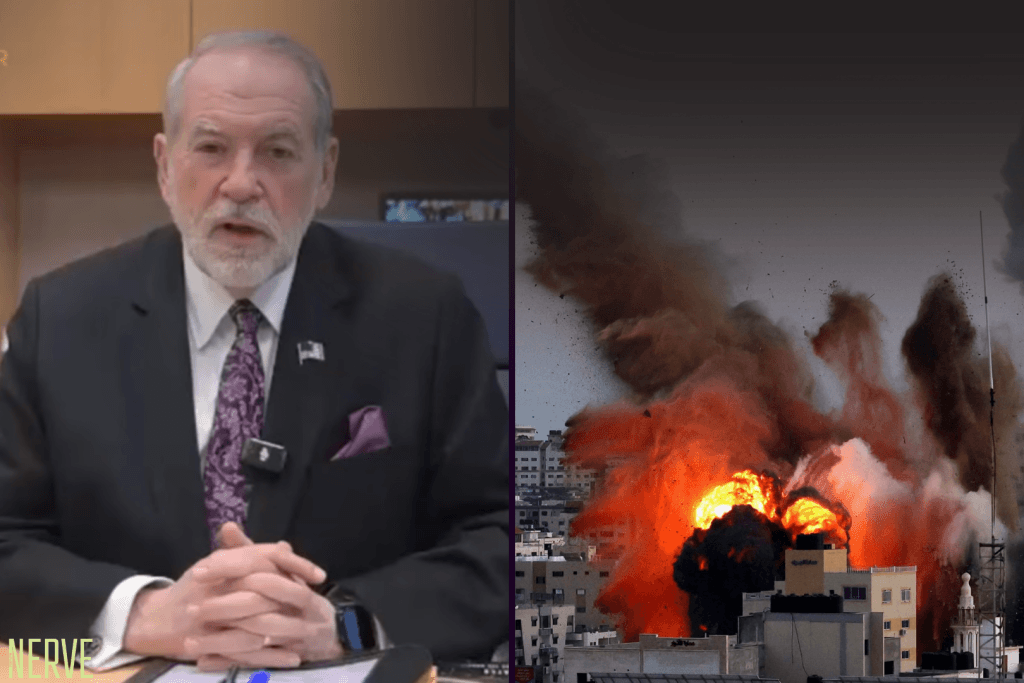
US Amb. Mike Huckabee: Israel did not "attack" Qatar—they just "sent a missile" into their country aimed at "one person."
— Chris Menahan 🇺🇸 (@infolibnews) December 11, 2025
"Unfortunately, there were some people who were near that missile strike that were injured or killed from it…" pic.twitter.com/qwzCxLhjUp
Yesterday, Huckabee’s dissonance with the administration was on full display regarding the sensitive issue of Qatar while working for a Jerusalem-based organization dedicated to manipulating global evangelical support.
Following an Israeli airstrike in Doha that killed innocent civilians, the Trump administration took a firm line. President Trump reportedly viewed the unilateral strike as a “red line” violation, forcing Prime Minister Netanyahu to apologize and signed an executive order declaring that any attack on Qatar would be treated as a threat to U.S. security.
Despite this clear directive from the Commander-in-Chief, Huckabee took a directly opposing view during a “Friends of Zion” program. Huckabee’s penchant for prioritizing his role as an evangelical zionist icon over his day job was on full display.
Addressing a slate of questions submitted by the pastors in attendance, Huckabee dismissed the gravity of the incident:
Well, let’s be real clear. There’s been some talk that Israel attacked the country of Qatar. It did not. It did, in fact, send a missile to attack a terrorist who had been partly responsible for the murder of Israeli citizens, but it did not attack the country. There was one missile. It was aimed at one person. Now, unfortunately, there were some people who were near that missile strike that were injured or killed from it. But that was not an attack on the nation of Qatar. If that’s the new standard, then the United States must apologize for going after Osama bin Laden while he was in Pakistan, being protected by the Pakistanis.
Qatar hosts Al Udeid Air Base, the forward headquarters of CENTCOM and home to thousands of American service members. It is a critical node in American power projection.
For a sitting ambassador to suggest that bombing the capital of a premier ally is no different than the raid on Abbottabad is insane. It validates the violation of Qatari sovereignty at the very moment the Trump administration is trying to assure Doha that its security is a US priority. This is diplomatic malpractice.
The Secret Meeting with a Convicted Spy
In a move that reportedly “alarmed” the CIA and blindsided the White House, it was revealed that Huckabee secretly met with Jonathan Pollard at the US Embassy in Jerusalem this past July. Pollard, a former US Navy intelligence analyst, spent 30 years in federal prison for one of the most damaging episodes of espionage in American history, having stolen thousands of classified documents to pass to Israeli intelligence.
Pollard is viewed as a hero by segments of the Israeli right in the types of circles Huckabee himself tries to frequent.
But, in the United States, he remains a symbol of betrayal in the intelligence community. For a sitting Ambassador to host a convicted spy inside the very embassy that represents American sovereignty is a stunning breach of diplomatic protocol.
That this meeting was kept off official schedules and hidden from the State Department suggests an awareness that it would not have been sanctioned by Washington.
A Diplomatic Liability?
Huckabee’s comments are not merely differences of opinion; they are public contradictions of the administration he serves. While President Trump was working to de-escalate tensions and reassure a key strategic partner in the Gulf, his own ambassador was publicly undermining those assurances, effectively validating an action the White House had condemned.
When an ambassador’s actions—from secret meetings with convicted spies to public rebuttals of presidential policy—begin to confuse allies and alarm intelligence agencies, the question must be asked: Who is Mike Huckabee actually representing in Jerusalem?
As the disconnect widens, calls for his recall are no longer just partisan talking points but a matter of preserving the coherence of American foreign policy.