Clarifying the American Interest in the Western Hemisphere as never been more urgent as increasingly absurd claims have arisen from those who called themselves “America First”
The capture of Nicolas Maduro by American forces on January 3 clarified something in nationalist discourse. There exists a faction, growing in visibility if not in coherence, that has confused opposition to foreign influence in American politics with opposition to a particular foreign country in all things at all times.
These are not the same thing, and the distinction matters now more than ever.
Zionism, understood as the political project of maintaining and advancing Israeli state interests, cannot and should not function as an efficacious force in American politics.
Its interests are not America’s interests. Its priorities are not our priorities. Its enemies are not necessarily our enemies.
The same is true of Britain, of France, of Japan, of any nation on earth. A coherent American nationalism refuses to subordinate American policy to any foreign interest, whether that interest arrives wearing a keffiyeh or a kippah.
But here is where a certain faction goes wrong: they have allowed their opposition to Israeli influence to become the organizing principle of their entire worldview.
They have become, in effect, Anti-Zionists first and nationalists second, if at all. And this inversion produces absurdities.
Maduro
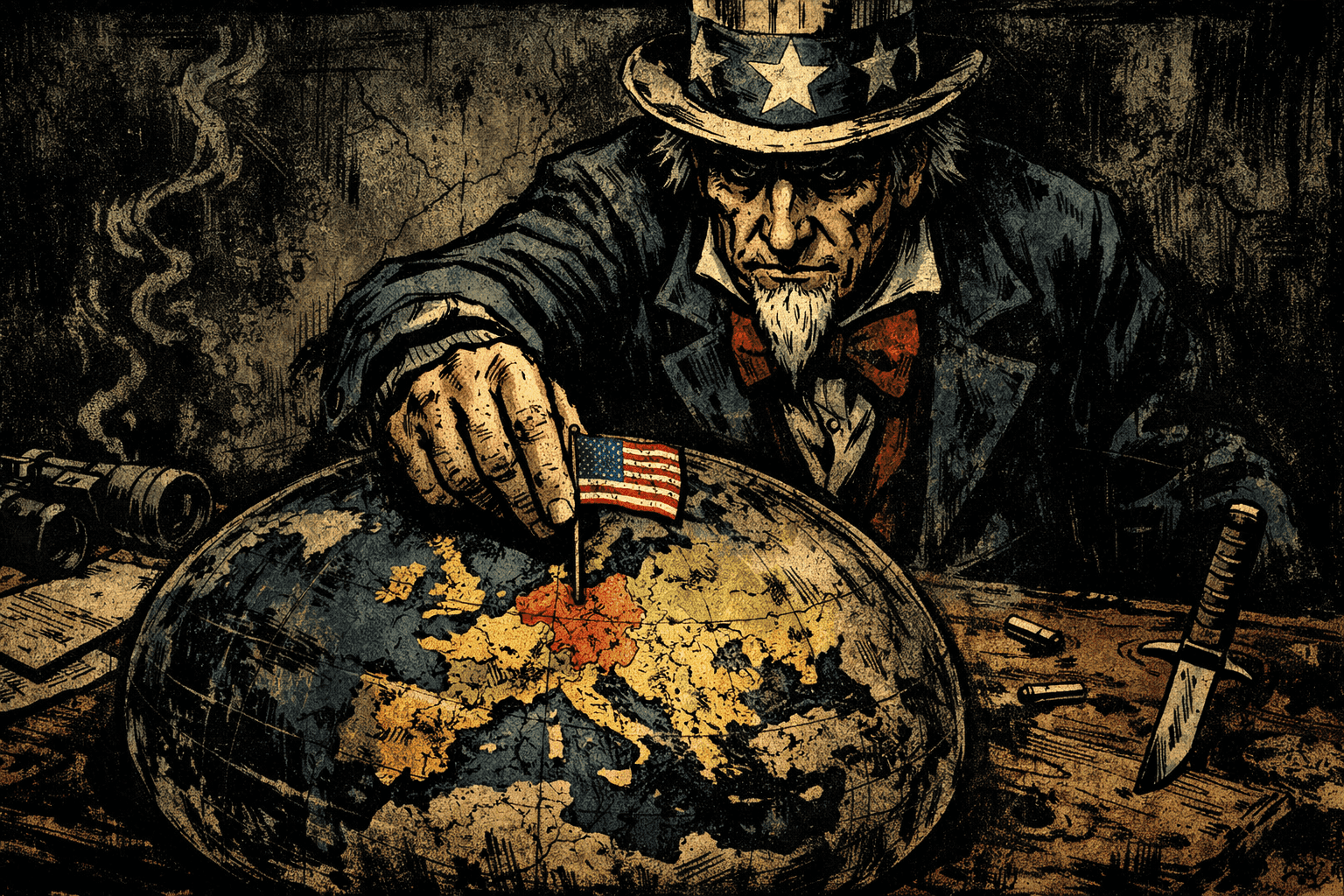
Consider the reaction to Maduro’s capture. The American Nationalist looks at Venezuela and sees a narco-state that has flooded our communities with cocaine, a regime that has invited hostile powers to establish military and intelligence infrastructure within striking distance of the American homeland, a government that has worked actively to undermine American interests throughout the Western Hemisphere.
The American Nationalist sees the removal of Maduro and asks: does this serve American interests? The answer, by any reasonable calculation, is yes.
The Anti-Zionist, by contrast, asks a different question first: does Israel benefit? And because Israel does benefit from the removal of a regime that hosted Iranian operations, the Anti-Zionist views the entire enterprise with suspicion.
The American interest becomes secondary to the imperative of ensuring that Israel does not derive advantage from American action.
This is not nationalism.
This is Anti-Zionism wearing nationalism as a costume. The genuine nationalist does not preempt his own national interest by first considering whether the Israelis are pleased in any given situation.
He considers American interest, full stop. If Israeli interests happen to align with American interests in a particular case, so be it. If they diverge, American interests take precedence.
But the Israeli position is not the variable against which American policy must be calibrated.
Iran and Israel
The twelve-day war between Israel and Iran in June 2025 brought these distinctions into sharp relief. It may be entirely coherent to believe that Iran had legitimate grievances in that conflict or that it prosecuted the war with far more restraint than Israel.
But believing that Iran had just cause in its prosecution of the twelve-day war is entirely different from believing it is acceptable for Iran to maintain a foothold in South America.
These are distinct questions, and conflating them is the error of the Anti-Zionist mind. The kids call this brain rot.
Iran is a regime that has no love for America. This is not propaganda; it is stated Iranian policy.
For over two decades, Iran has used Venezuela as a launchpad for operations throughout the Western Hemisphere.
The Islamic Revolutionary Guard Corps, its Quds Force, and Iranian intelligence have all maintained a presence in Caracas. Iranian drone factories have been established on Venezuelan air bases.
Hezbollah operatives have obtained Venezuelan citizenship, allowing them to move freely across South America.
Iran has used Venezuelan territory to plan operations against American targets, including the 2021 plot to kidnap an Iranian-American journalist from New York and transport her through Venezuela to Tehran.
An American Nationalist looks at this situation and sees an obvious threat to American security. A hostile foreign power has established operational infrastructure within our hemisphere, infrastructure that has been used to plan attacks on American soil.
The removal of the regime that enabled this infrastructure is therefore an American interest, regardless of who else might benefit from it.
Lodge’s Unfinished Business
The Trump administration’s 2025 National Security Strategy articulated what it called the “Trump Corollary” to the Monroe Doctrine: a reassertion of American predominance in the Western Hemisphere and a refusal to tolerate hostile foreign powers establishing military presence in our neighborhood.
This is welcome as far as it goes. But it does not go far enough, and in its incompleteness it reveals something important about the limits of the current nationalist revival.
In 1912, Senator Henry Cabot Lodge closed a loophole in the Monroe Doctrine that had allowed foreign powers to hide behind private commercial interests.
When a Japanese syndicate moved to purchase a strategic harbor at Magdalena Bay in Baja California, Lodge recognized that it did not matter whether the acquisition was made by a government or a corporation.
What mattered was whether a foreign power would gain “practical power of control” over strategic territory in our hemisphere. The Senate ratified his corollary unanimously.
The genius of Lodge’s formulation was its indifference to the identity of the foreign power. Japan in 1912 was not an enemy of the United States. It had been an ally against Russia less than a decade earlier. But Lodge understood that the question was not whether the foreign actor was friendly or hostile. The question was whether the actor was American. If the answer was no, then strategic assets should not fall under their control.
The Trump Corollary, by contrast, focuses narrowly on adversaries: Iran, China, Russia. It addresses the threat of hostile powers establishing footholds in our hemisphere. This is necessary but insufficient.
A genuine American System approach would even extend the same suspicion to allied interests acquiring majority investment in American strategic assets.
Consider: if a Chinese state-backed firm acquiring control of American ports is a threat to national security, why is a Qatari sovereign wealth fund acquiring the same ports acceptable? If Iranian drone factories in Venezuela represent an intolerable foreign presence, what of British or Israeli or Saudi capital acquiring controlling stakes in South American defense contractors, technological firms, semiconductor manufacturers, or critical infrastructure?
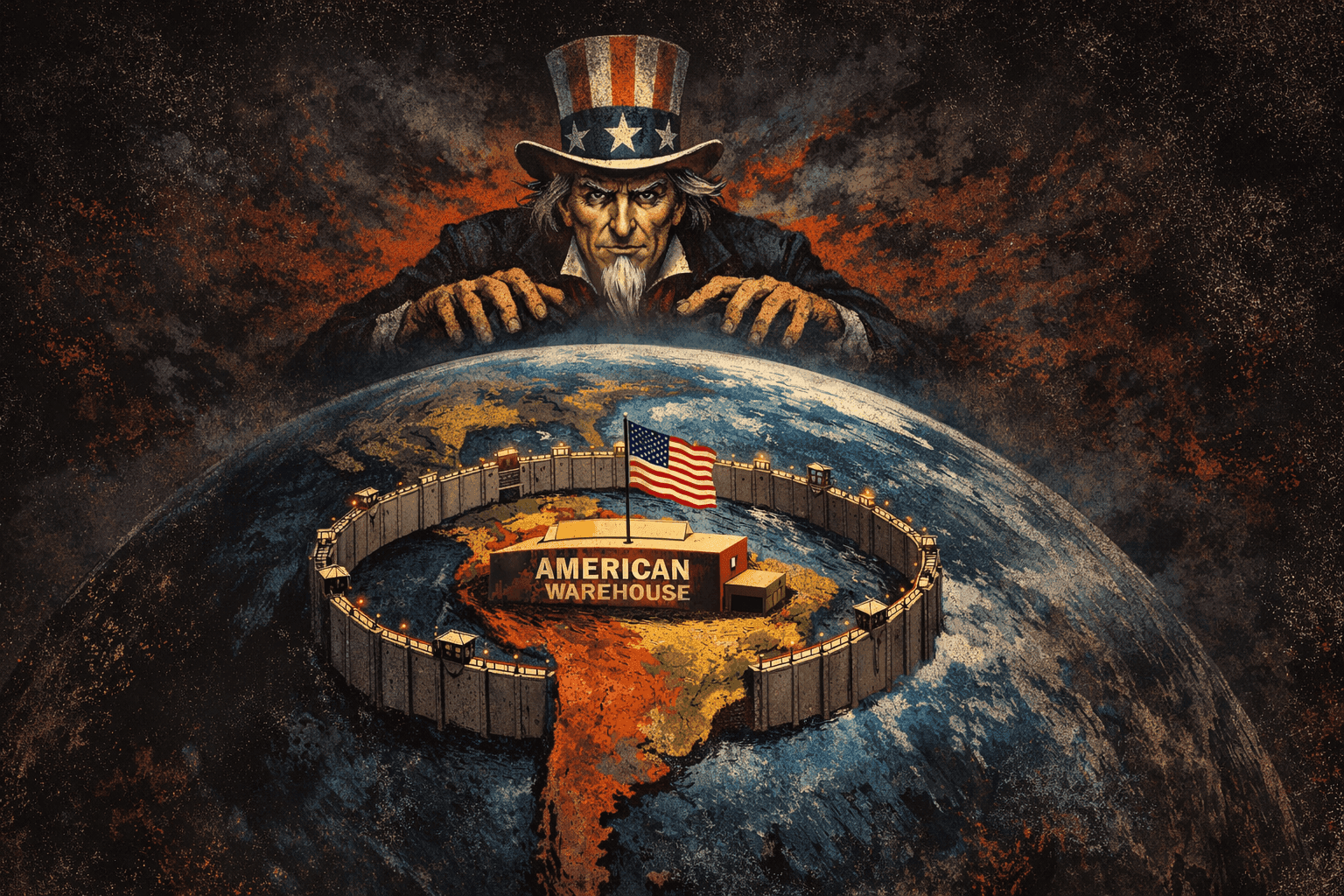
The nationality of the investor may affect our diplomatic response, but it does not change the fundamental problem: Americans losing control of what is rightfully the American warehouse.
This is where the Anti-Zionist faction reveals its incoherence most starkly.
They will thunder against Israeli influence while remaining silent about, or even celebrating, Iranian or Chinese or Russian activities that undermine American interests. But a consistent nationalism, one grounded in the American System tradition, would view all foreign control with equal suspicion. It would not pick and choose based on which foreign actor it happens to find sympathetic.
One Last Time
The American Nationalist position is straightforward: American interests come first. This means opposing foreign influence in American politics, whether that influence comes from Israel, Saudi Arabia, China, or any other power. It also means defending American security by removing hostile infrastructure from our hemisphere. These two positions are not in tension. They are both expressions of the same underlying commitment to American sovereignty and American interest.
The Anti-Zionist position, by contrast, has become incoherent. It has allowed opposition to one particular foreign influence to become the lens through which all policy questions are evaluated.
The result is a faction that cannot support obvious American interests because those interests happen to align, in specific cases, with Israeli interests.
The capture of Maduro is a clarifying moment. It forces a choice. Either you evaluate American policy by the standard of American interest, or you evaluate it by the standard of Israeli displeasure. You cannot do both. And if you choose the latter, you have revealed that you are not, in fact, a nationalist at all. You are simply an Anti-Zionist who has borrowed the language of nationalism for rhetorical convenience.
American nationalism requires the clarity to distinguish between these positions. Iran’s treatment by Israel in the twelve-day war is one question. Iran’s presence in our hemisphere is another. These are distinct matters requiring distinct analysis. The nationalist analyzes both through the lens of American interest. The Anti-Zionist analyzes both through the lens of Israeli advantage.