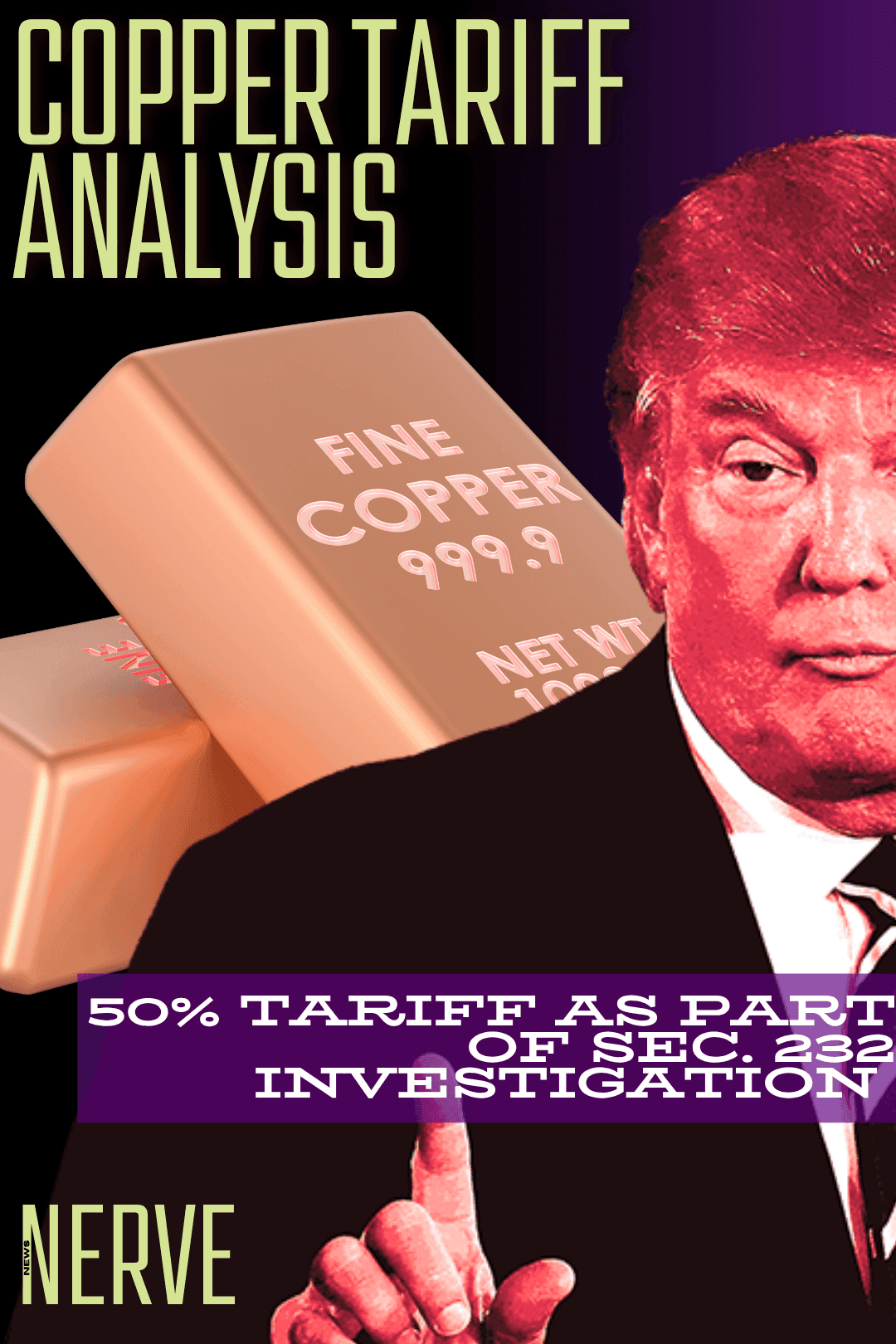
Analysis: 50% Copper tariffs are a boon to America’s future, blight to foreign dependency
August 1, 2025|3 min read
Comments
Continue Reading
Continue Reading
On July 30, 2025, President Donald Trump signed a comprehensive proclamation imposing significant tariffs on copper imports, as part of his effort to fulfill his campaign promise to reinvigorate American manufacturing. According to a recent government analysis, the decline in American domestic copper production capabilities has become a matter of national security. The proclamation imposes a 50 percent tariff on semi-finished copper products and intensive copper derivative products, effective August 1, 2025, representing one of the most substantial trade actions targeting the copper sector in recent decades.
The Commerce Department’s investigation revealed alarming dependencies in America’s copper supply chain. Copper is the second most widely used material by the Department of Defense and is a necessary input in a range of defense systems, including aircraft, ground vehicles, ships, submarines, missiles, and ammunition. The investigation found that a single foreign country dominates global copper smelting and refining, controlling over 50 percent of global smelting capacity and holding four of the top five largest refining facilities.
The economic implications extend beyond defense applications. Copper plays a central role in the broader United States industrial base, with its exceptional electrical conductivity and durability making it indispensable to critical infrastructure sectors that support the American economy, national security, and public health.
The United States was a world leader across the value chain of copper production (mining, refining, semi-finished goods, and finished goods containing copper) for most of the 20th century, but United States copper production has plummeted.
This decline is attributed to multiple factors, including unfair trade practices abroad, exacerbated by overly burdensome environmental regulations at home, which have hollowed out United States copper refining and smelting. The administration specifically cites foreign state subsidies and overproduction that flood international markets with artificially low-priced copper products, driving United States producers out of business.
Semi-Finished Copper Products: These include copper billets, slabs, and other intermediate forms that serve as raw materials for further manufacturing processes. These products typically undergo initial processing but require additional fabrication before reaching end-use applications.
Intensive Copper Derivative Products: Products manufactured from copper with high copper content or specialized uses. While the complete list remains in the proclamation’s Annex (not yet publicly released), these products represent higher value-added items that incorporate significant copper content in their manufacturing.
Phase 1 (January 1, 2027): 15 percent universal tariff on refined copper Phase 2 (January 1, 2028): 30 percent universal tariff on refined copper
This graduated approach provides domestic industry time to rebuild capacity while immediately addressing the most critical vulnerability points in semi-finished and derivative products.
The tariff structure notably excludes certain categories:
Beyond tariffs, the proclamation implements domestic sales requirements under Defense Production Act authorities:
The success of this policy will largely depend on the domestic industry’s ability to scale production capacity and the effectiveness of anti-circumvention measures in preventing trade deflection. With comprehensive monitoring and review mechanisms in place, the administration has positioned itself to adjust the policy framework as domestic capabilities evolve and market conditions change.