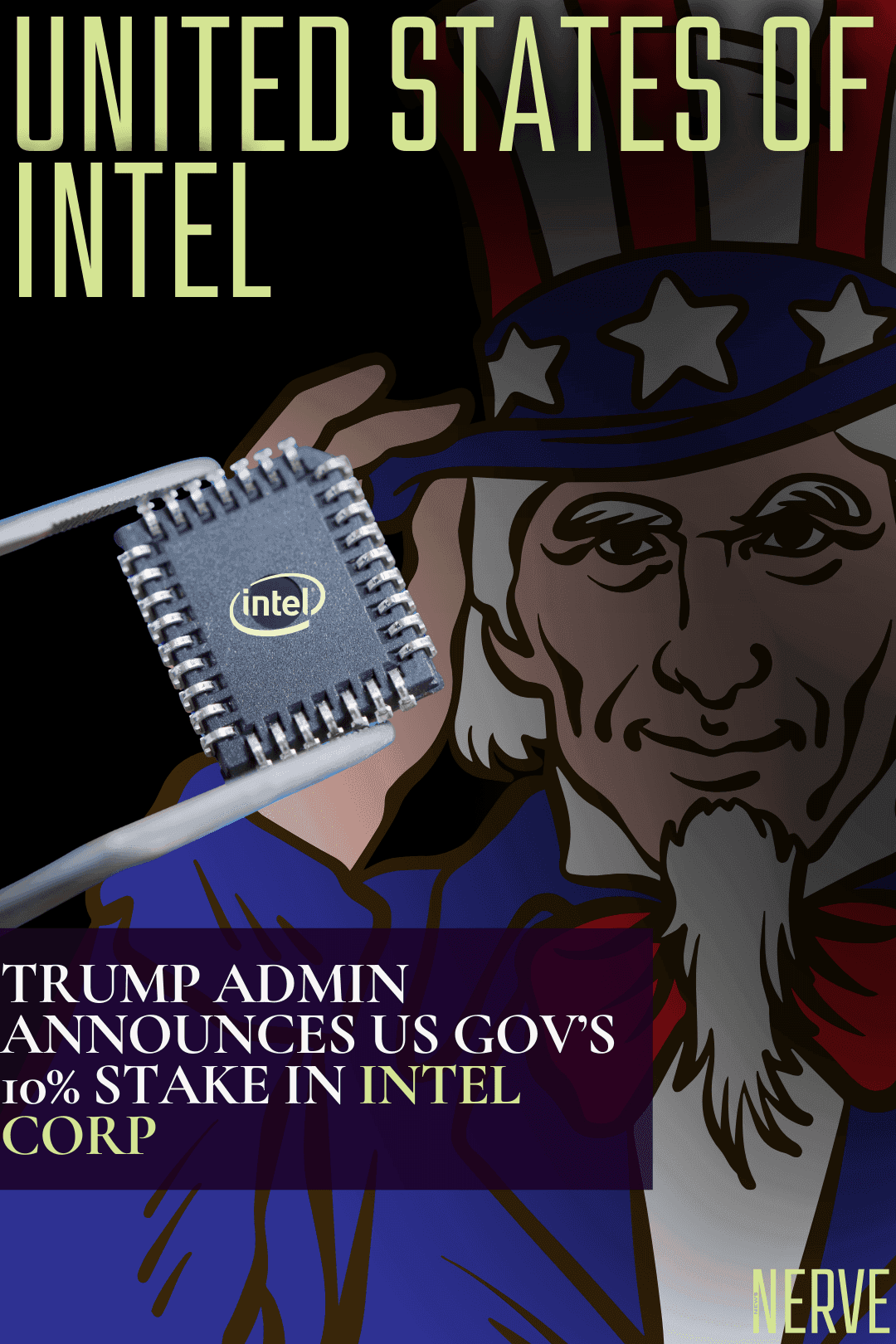
Trump’s 10% Intel grab is an unprecedented victory for nationalist economic policy
August 22, 2025|3 min read
Comments
Continue Reading
Continue Reading
President Trump announces Intel has agreed to give the U.S. government a 10 percent equity stake worth $10 billion by converting CHIPS Act grants into ownership, creating an unprecedented partnership model the administration plans to expand to other strategic industries.
President Donald Trump announced Friday that Intel has agreed to give the United States a 10 percent stake in the struggling chipmaker worth $10 billion, marking an unprecedented direct government investment in a major American technology company. The deal represents a dramatic shift from traditional federal subsidies to an equity-based partnership model that Trump says he plans to replicate across other strategic industries.
BIG NEWS: The United States of America now owns 10% of Intel, one of our great American technology companies. This historic agreement strengthens U.S. leadership in semiconductors, which will both grow our economy and help secure America’s technological edge. Thanks to Intel… pic.twitter.com/AYMuX14Rgi — Howard Lutnick (@howardlutnick) August 22, 2025
View post on X ↗From Criticism to Partnership
The agreement represents a remarkable turnaround in Trump-Intel relations. Just two weeks ago, Trump publicly called for the immediate resignation of Intel CEO Lip-Bu Tan over alleged connections to China. However, following a White House meeting last week, the relationship appears to have transformed into a strategic partnership focused on boosting American semiconductor manufacturing.
“I said, I think you should pay us 10% of your company,” Trump told reporters in the Oval Office Friday. “And they said yes. He walked in wanting to keep his job, and he ended up giving us $10 billion for the United States.”
Converting CHIPS Act Grants to Equity
The innovative deal structure involves converting portions of Intel’s Biden-era CHIPS and Science Act funding into government equity rather than traditional grants. Treasury Secretary Scott Bessent and Commerce Secretary Howard Lutnick confirmed the approach, with Lutnick stating that “America should get the benefit of the bargain” when providing taxpayer funding to corporations.
Intel was originally awarded $7.86 billion in direct CHIPS Act funding to advance semiconductor manufacturing projects across Arizona, New Mexico, Ohio, and Oregon. The company also received an additional $3 billion contract for defense-related semiconductor production under the Secure Enclave program.
Intel’s Mounting Challenges
The government intervention comes as Intel faces its most difficult period in decades. Once America’s premier semiconductor company, Intel has fallen behind rivals like Taiwan Semiconductor Manufacturing Company and struggled to capitalize on the artificial intelligence boom. The company announced plans to lay off 15 percent of its workforce – approximately 15,000 employees – as part of a broader $10 billion cost-cutting initiative.
Intel’s financial struggles have complicated its ambitious expansion plans, including a delayed $28 billion manufacturing facility in Ohio that represents one of the most visible CHIPS Act projects. The company posted significant losses in recent quarters while competitors captured market share in critical areas like AI processing chips.
Broader Strategic Implications
Trump framed the Intel deal as a template for future government-industry partnerships, particularly in sectors deemed critical to national security. The administration has reportedly been exploring similar equity arrangements with other companies in strategic industries, moving away from the traditional model of providing grants without ownership stakes.
The deal also reflects growing bipartisan recognition that domestic semiconductor manufacturing represents a national security priority. With most advanced chips currently produced in Taiwan, the Intel partnership aims to rebuild American technological independence in a sector crucial to everything from smartphones to military equipment.
Commerce Secretary Lutnick celebrated the agreement on social media, declaring that “The United States of America now owns 10% of Intel, one of our great American technology companies.”