Analysis: United States, China, and Malaysia worked quickly to resolve Thailand-Cambodia border dispute
July 29, 2025|4 min read
Comments
Continue Reading
Continue Reading
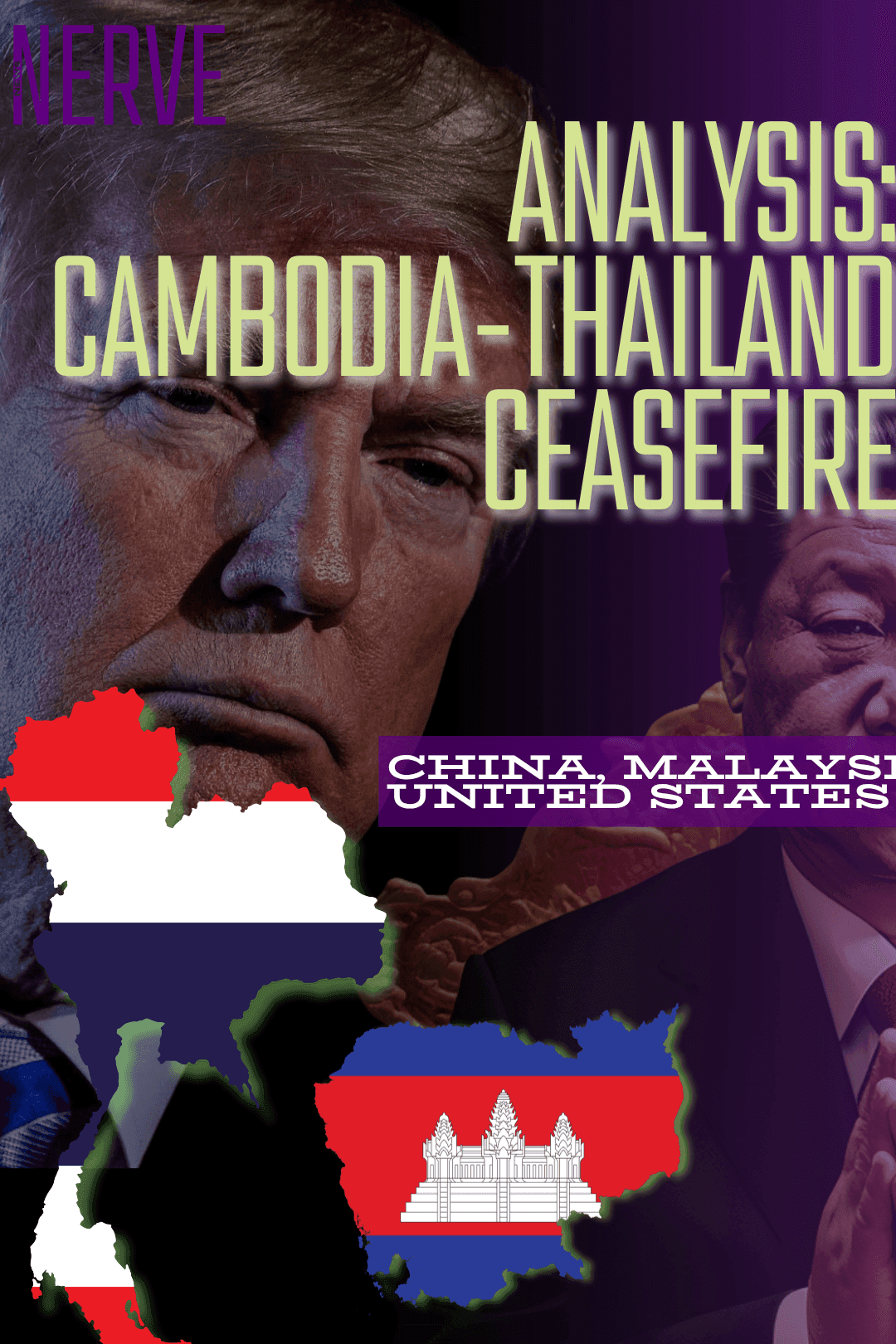
A ceasefire between Cambodia and Thailand has been successfully mediated in Malaysia following a recent escalation of tensions and border clashes between the two Southeast Asian nations. The agreement was reached after talks hosted and facilitated by Malaysian Prime Minister Anwar Ibrahim in Putrajaya, but the successful ceasefire was not the result of a single actor’s efforts.
Instead, a multi-pronged approach where Malaysia, the United States, and China each played distinct but complementary roles resulted in the two sides coming to the negotiating table. This collaborative, albeit uncoordinated, effort highlights a potential new template for regional crisis management in Southeast Asia, driven, at least in part, by each sponsor’s disinterest in exchanging proxy blows over less strategic real estate.
Here’s how leaders from Thailand and Cambodia came to be shaking hands before Malaysian Prime Minister Anwar Ibrahim, with the latter assuring the world that “both Cambodia and Thailand reached a common understanding” towards “an immediate and unconditional ceasefire.”
The long-standing alliances of China with Cambodia and the United States with Thailand have come into focus amidst recent border tensions between the two Southeast Asian nations. While both global powers maintain strong relationships with their respective regional partners, their approaches to influencing the recent conflict and fostering resolution have differed significantly.
China and Cambodia share what they term an “ironclad friendship,” characterized by extensive economic and military cooperation. Beijing is a significant supplier of military hardware to Cambodia and has provided substantial financial aid. In the recent border dispute, China publicly called for a peaceful resolution and denied supplying new weapons to Cambodia for the conflict.
On the other side of the border, the United States and Thailand have a long-established military alliance and a robust economic partnership. The U.S. has actively engaged with both nations during the recent flare-up. Reports indicate that the Trump administration directly linked the finalization of a trade agreement with both Cambodia and Thailand to a de-escalation of the conflict. This economic pressure is seen as a significant factor in bringing both parties to the negotiating table for a ceasefire, which was ultimately mediated by Malaysia. The presence of U.S. officials at these talks further underscores Washington’s active role in resolving the immediate crisis.
In the diplomatic aftermath of the successful ceasefire, a quiet but notable reluctance has emerged from both Washington and Beijing to acknowledge the other’s part in the deal. U.S. officials have publicly highlighted their targeted economic pressure as the key catalyst for talks while praising Malaysia’s regional leadership, but have conspicuously avoided crediting China’s strategic neutrality for preventing the conflict from escalating into a proxy war. Similarly, Beijing has framed the resolution as a triumph for “Asian solutions to Asian problems,” lauding Malaysian diplomacy while pointedly ignoring the decisive role American economic leverage played in bringing the parties to the table.
Secretary of State Marco Rubio issued the following statement:
The United States applauds the ceasefire declaration between Cambodia and Thailand announced today in Kuala Lumpur. President Trump and I are committed to an immediate cessation of violence and expect the governments of Cambodia and Thailand to fully honor their commitments to end this conflict. We are grateful to Malaysian Prime Minister Anwar Ibrahim for his leadership and for hosting the ceasefire talks. We urge all parties to follow through on their commitments. The United States will remain committed to and engaged in this U.S.-Malaysia-organized process to end this conflict.
Foreign Ministry Spokesman Guo Giakun issued China’s corresponding statement:
In the past few days, the international community, especially Malaysia, the rotating chair of ASEAN, has actively gone between Thailand and Cambodia for peace talks, and jointly facilitated the leaders’ meeting of Cambodia and Thailand on July 28. Reaching a ceasefire agreement between Cambodia and Thailand is an important step forward for driving the peaceful settlement of the situation. China commends and welcomes this outcome.
China supports Malaysia to continue playing its role as the rotating chair of ASEAN, promoting political settlement of the issue in “the ASEAN way”, and supports all efforts conducive to increasing mutual trust and deescalating the situation. As a friend and close neighbor of Cambodia and Thailand, China will maintain close communication with all parties including the two countries, and on the basis of respecting the will of Cambodia and Thailand, continue to work in our own way and play a constructive role in consolidating the ceasefire agreement.