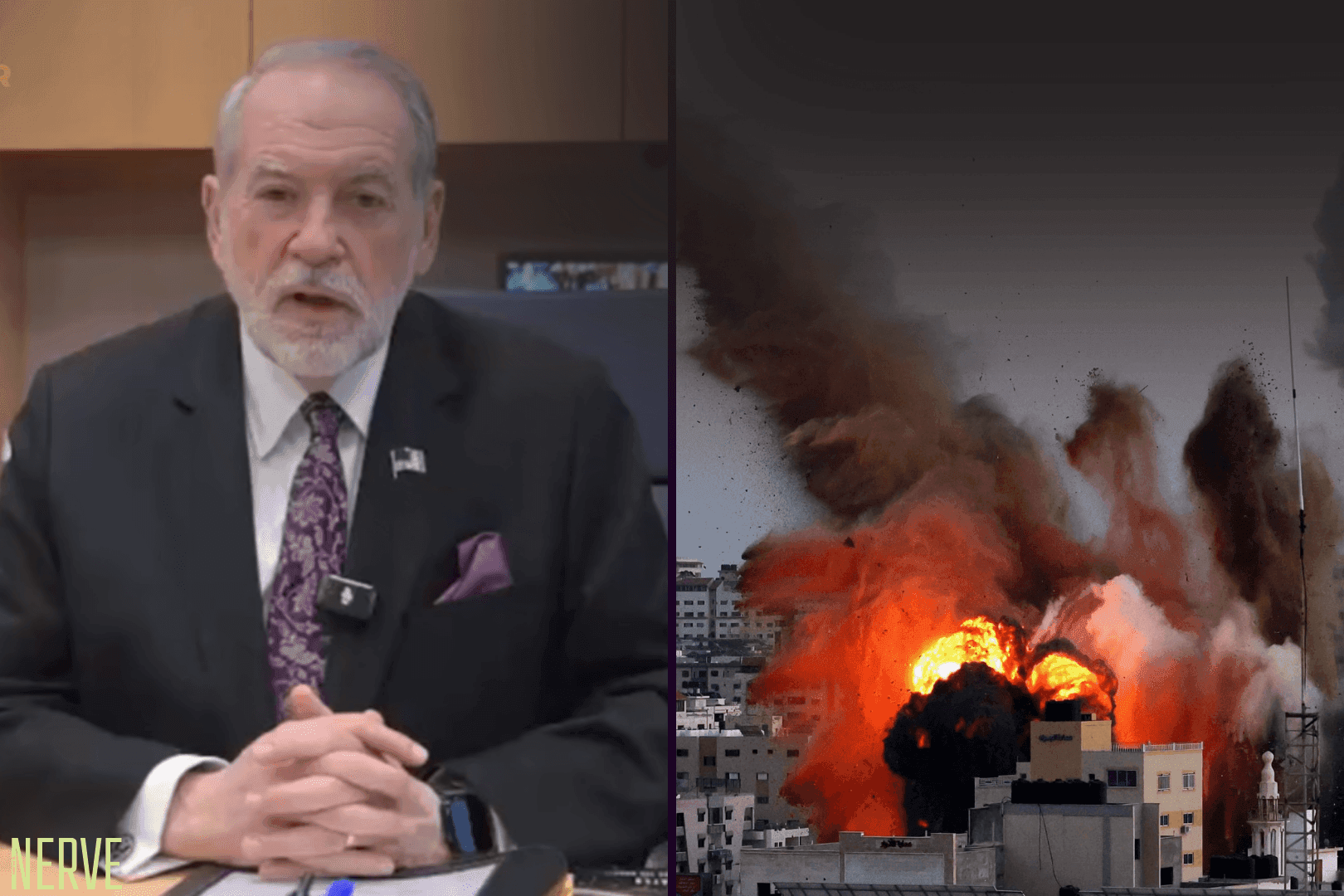
Just who was expected to react violently, anyway?
No one thinks Shiloh Hendrix was trying to become an internet sensation, an infamously hated persona non grata, or a darling of an American public craving another bout of culture war.
The basic facts are by now notorious. A young Black child, reportedly on the autism spectrum, approached the diaper bag Hendrix had brought for her toddler and removed an applesauce pouch. Hendrix confronted him and called him the N-word.
Cruel? Yes. Disproportionate? Sure. An indefensible way for an adult to speak to a young child? Certainly.
It can be all those things anywhere in the world but only in America is it also just speech.
Only in America.
Yet, more than a year later, Hendrix found herself before a jury on criminal disorderly-conduct charges arising from the encounter.
The Fighting Words Theory
The prosecution’s theory was that Hendrix’s words to Omar constituted “fighting words,” a narrow category of speech deemed likely to provoke an immediate violent response. Yet the recorded exchange shows Omar pursuing the confrontation, eliciting the words, remaining composed, and preparing to distribute the result online.
That is not a minor inconsistency. It is the central constitutional problem.
The fighting words doctrine is not a general prohibition on hateful language. It does not allow the government to criminalize words simply because they are vulgar, degrading, or socially condemned. It applies only in narrow circumstances where personally directed abuse is likely to produce an immediate breach of the peace.
Nothing visible in the recording suggests that Omar was on the verge of such a reaction. His conduct appears deliberate from beginning to end. He approached Hendrix, followed her, questioned her, challenged her to repeat herself, and continued filming when she did.
The disorder, such as it was, did not arise because an unsuspecting man was suddenly struck by words so provocative that violence became likely. Omar was an active participant in the exchange, and he deliberately obtained the footage that later became evidence against Hendrix.
The jury ultimately drew a curious distinction. Hendrix was found not guilty of disorderly conduct against the child she had insulted. She was found guilty, however, of disorderly conduct involving Sharmake Beyle Omar, the adult bystander who confronted and recorded her.
That split verdict raises an obvious question.
Just who was expected to react violently, anyway?
Enter the cameraman
She was carrying her baby when she was approached by a camera-wielding Somali by the name of Sharmake Beyle Omar. Omar had followed Hendrix and demanded she acknowledge what had just taken place.
In 2022, Omar and another man were charged with offenses and embroiled in a sexual assault case until March of 2025 when, “in the interest of justice",” the charges against them were dropped by the prosecution.
He has also faced a disorderly conduct charge of his own.
This doesn’t tell us whether Hendrix is innocent. But it does tell us a bit about his character. Omar isn’t a passive sort of person, he inserts himself into encounters, and demands performance for his camera.
The Jury’s Backward Distinction
The jury found Hendrix not guilty of disorderly conduct against the child, even though that original use of the slur was the act that generated the outrage and made the case nationally famous.
Instead, she was convicted for the later exchange with Omar, the adult who approached her, followed her, and told her to repeat the word.
He asked. She answered. And the American justice system decided to ratify social media moaning about hate speech.
It will be overturned.