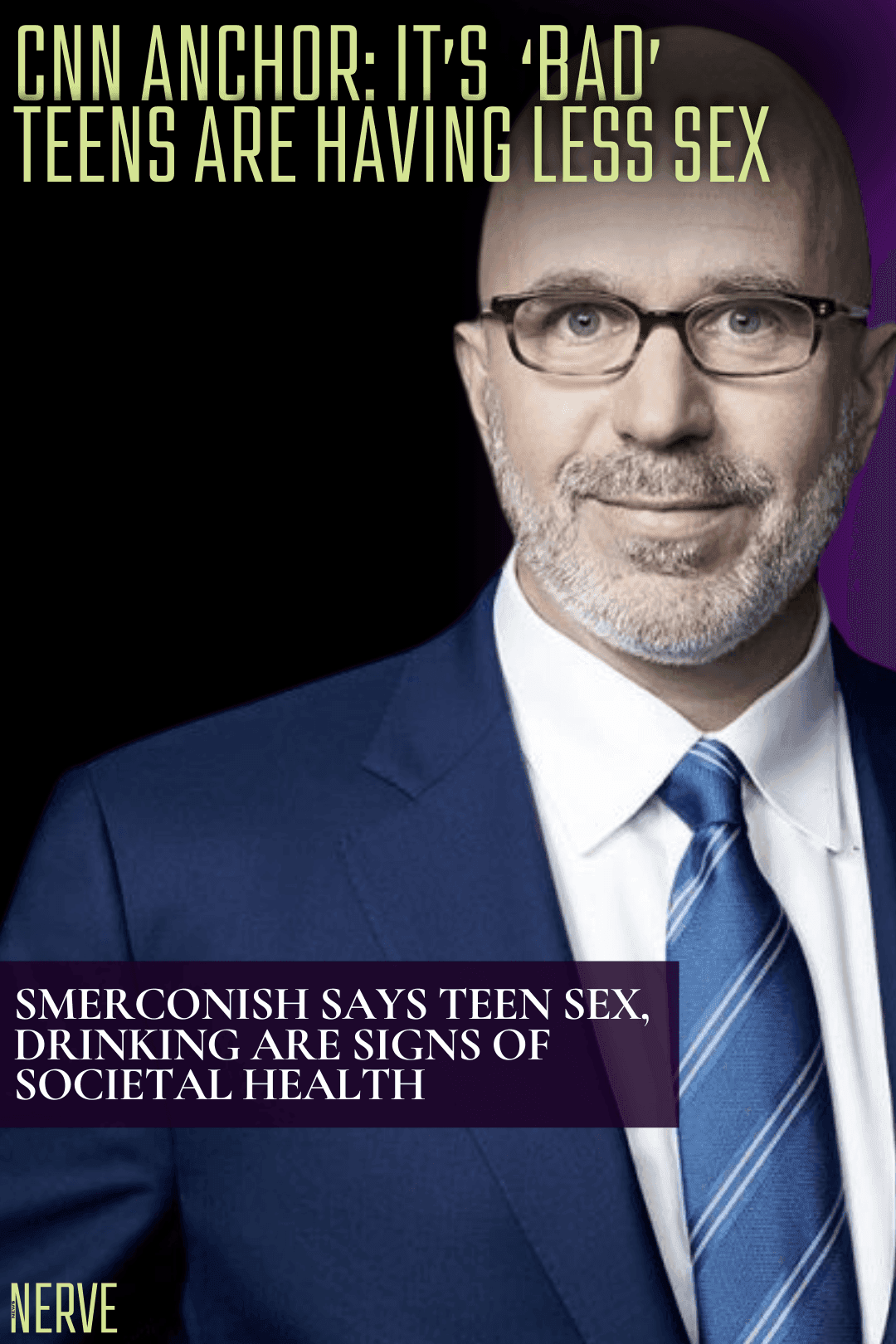
CNNs Saturday host says declines in teen sex, alcohol use are ‘bad’ for society
August 24, 2025|2 min read
Comments
Continue Reading
Continue Reading
On CNN today, Michael Smerconish said drops in teen sex and alcohol use are “actually bad news” because they signal a decline in relationships.
CNN's Michael Smerconish says that more teens should be having sex, drinking and that it's the biggest problem this country faces before announcing he's on vacation next week. pic.twitter.com/5z05kMLdBZ — Nerve News (@NerveDotNews) August 24, 2025
View post on X ↗Michael Smerconish made the controversial statement on CNN today, arguing that the real story behind these trendlines is shrinking social connection. Here’s his quote in full:
“Back in the day, in high school, it was a function of ‘where are we going?’ not whether we’re going out. And this is — as soon as I saw that drinking headline — and oh! I’ve gotta tell you one thing, I’ll say it quickly, don’t worry. It’s like the sex headline. When you see the headline that says that ‘fewer teens are having sex’ and as a parent, you say, ‘well, boy, that’s good news!’ And, similarly, fewer Americans are drinking. ‘Well, that’s good news.’ No! They’re bad. They’re actually bad news because it’s also representative of a decline in relationships and that’s the biggest problem this country faces!”
Taken at face value, his line appears to valorize higher teen sexual activity and more drinking as indicators of healthier social bonds, which are formulations many Americans will find alarming. Public-health experts, parents, and child-safety advocates view the news of decreases on these fronts through a very different lens: lower teen sex and reduced alcohol consumption are usually framed as improvements in safety, education outcomes, and long-term well-being.
The reaction from parents, educators, and public health professionals was blunt. Should a prime-time host be allowed to present teen sex and alcohol use as signals of social health? Certainly not. For minors, that framing is dangerous. It discounts consent dynamics, peer pressure, intoxication, and the well‑documented link between alcohol and sexual assault. It also ignores the gains of the last decade: lower teen pregnancy and STI rates, fewer drunk driving deaths, and fewer emergency department visits tied to alcohol.
Critics argue that relationships do not require sex or alcohol. They cite sports, arts, faith groups, jobs, and supervised social events as paths to connection that keep risk low. They also note that adults on national television have a duty not to appear to endorse illegal conduct by minors.