Brad Bird’s long-delayed film brings old fear to the present: becoming obsolete
Netflix’s Ray Gunn feels like it emerged from a bygone era, and that’s with good reason. Brad Bird conceived the first draft of its screenplay alongside Matthew Robbins back in 1989, a decade before his beloved cult classic The Iron Giant hit cinemas.
Unfortunately, Bird’s vision first came at a time when the medium was growing less and less receptive to the films and, as the 90s rolled into the early aughts, commercial failures weakened his case for getting this one to production.
Produced by Skydance Animation, it follows private detective Raymond Gunn, who is voiced by Sam Rockwell, as he traverses the futuristic city of Metropia. It will be in select theaters on Dec. 4 and hit Netflix on the 18th of that month.
Its mix of science fiction, archaic relics, and detective noir recalls a time when American studios were unafraid of testing new waters that could reach beyond frilly princesses.
The Lost Era
During the mid-to-late 90s, an intentional shift began with studios developing media for children who were at risk of aging out of the typical cartoons produced for younger audiences. Boys were an element of this demographic that were particularly underserved and pretty much every production house from Fox to Disney tried to lay claim to that audience.
Elaborate worlds that mixed past and present, danger lurking behind every corner, and an outside coming into his own and taking consequential action.
The result was a golden age of media for American boys dominated by a chiefly American spirit.
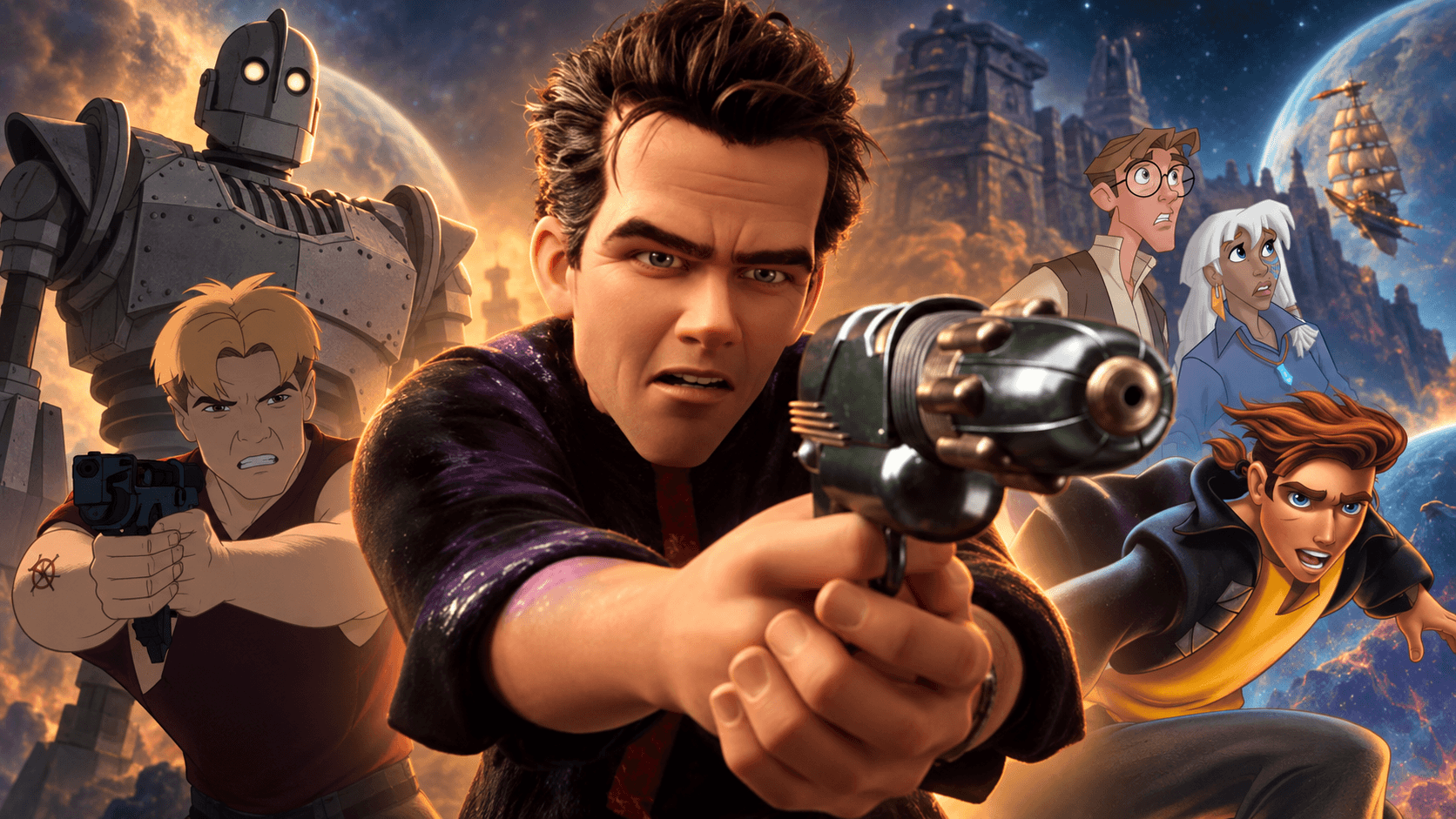
Films like Titan AE, Osmosis Jones, Treasure Planet, and The Iron Giant, engendered this spirit as they entered the box office… and exited as utter flops.
Much of their failure came down to timing.
But these rejections were also a product of their cultural era: parents were hesitant to let younger children see animation with violence and the young teens, the cohort specifically targeted by these flicks, still viewed cartoons as something far too childish.
They wanted real, live action. Something, they imagined, signaled adulthood.
Meanwhile, these films were competing with blockbusters like Harry Potter, Shrek, and Tomb Raider.
Ultimately, Disney decided to pivot away from these sorts of films, investing in boys via softer, more family-accessible features like Cars and The Incredibles.
A future catching up with the past
Bird makes all of this history personal in releasing this largely unchanged screenplay. It is, in that respect, much more a declaration of victory, of insight, than it is a time capsule and it has more to offer modern audiences.
Gunn, for its part, couldn’t be more prescient. Ray, the movie’s protagonist, is a struggling detective fighting for his place in a future society that comes with all the expected issues: crime, corruption, aliens, and femme fatales.
It’s also accompanied by robots who want to take over his job just as the real world cultural anxieties around AI have begun reaching their peak.
The world is still catching up with his imagine.
As a kid, you might have watched Treasure Planet’s Jim Hawkins search for his place in the world and now you’re old enough to fear losing your own.
Ray Gunn hits select theaters on December 4.